

AIKIDO
Ottawa Aikikai
About Aikido
Aikido, a modern martial art created by Morihei Ueshiba (1883 – 1969) is eminently appropriate for today’s society. Though a relatively recent martial art, Aikido’s roots run deep. Morihei Ueshiba (often referred to as O’Sensei – Venerable Teacher) trained in a variety of martial arts. What seemed to have the most influence was both his training in various styles of Jiujutsu and training with different Japanese weapons (Kenjutsu), particularly sword and spear.
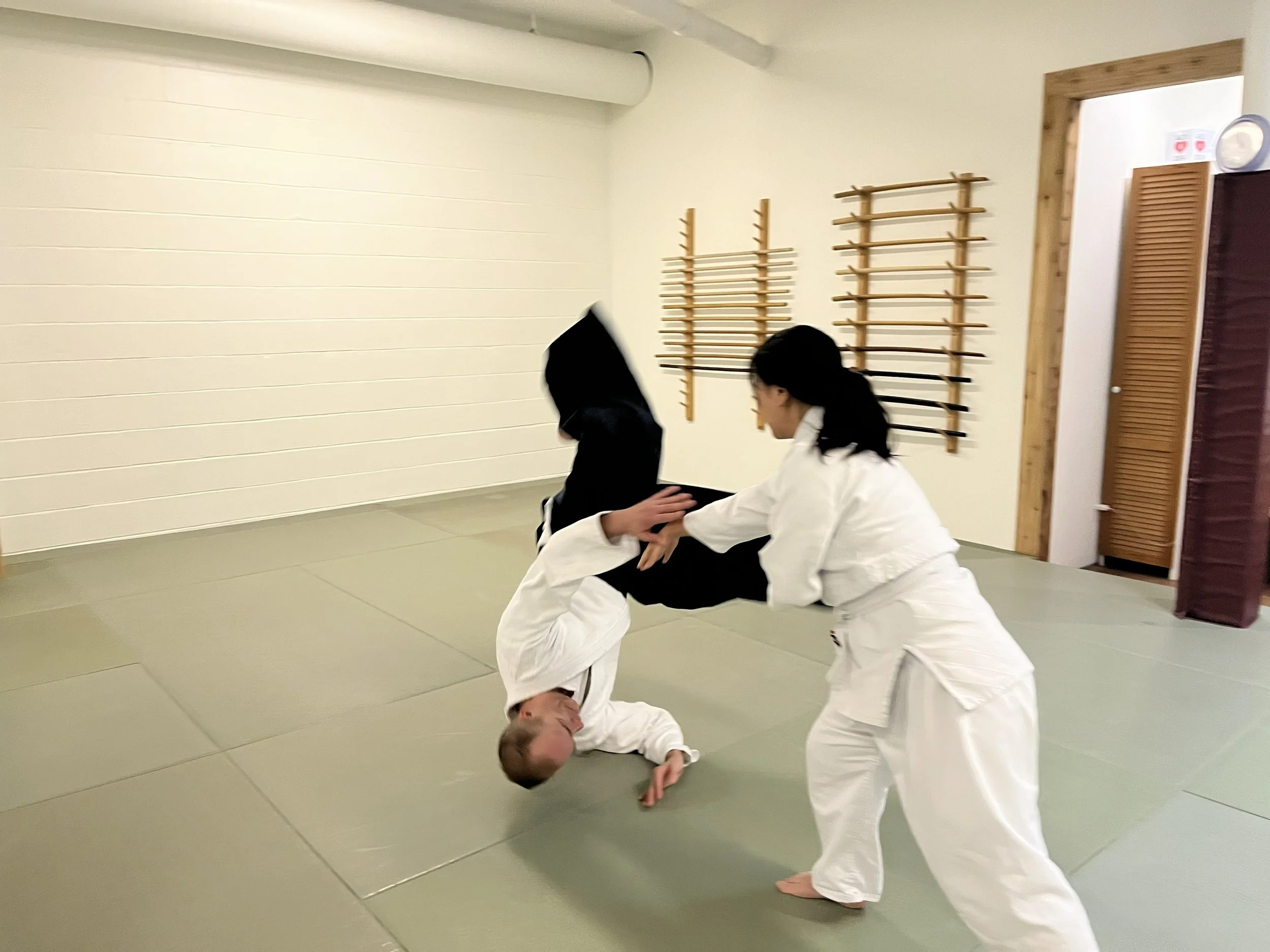
Drawing on both Jiujutsu and Kenjutsu, Aikido has both empty hand techniques as well as practice with weapons – boken (wooden sword), jo (short staff) and tanto (wooden knife). The movements are predominantly circular, using spiral movements to blend with the attacks. Aikido practice involves practice in both performing the technique (nage waza) and performing the attack and the resultant fall (ukemi waza). Aikido has an ethic that ensures that attackers are not harmed. However, do not mistake this for being ineffective – Aikido is a martial art and above all, techniques must be effective.
Through his years of dedication and training, O’Sensei became incredibly strong. However, he was also a deeply spiritual person -- a devout follower of the Japan’s traditional Shinto religion. He came to realize that the ability to overcome one’s ego was more important than the physical skill and practice. Ueshiba’s famous motto, “Masakatsu Agatsu”, contains the essence of the spirit of Aikido:
“True victory is victory over the self”
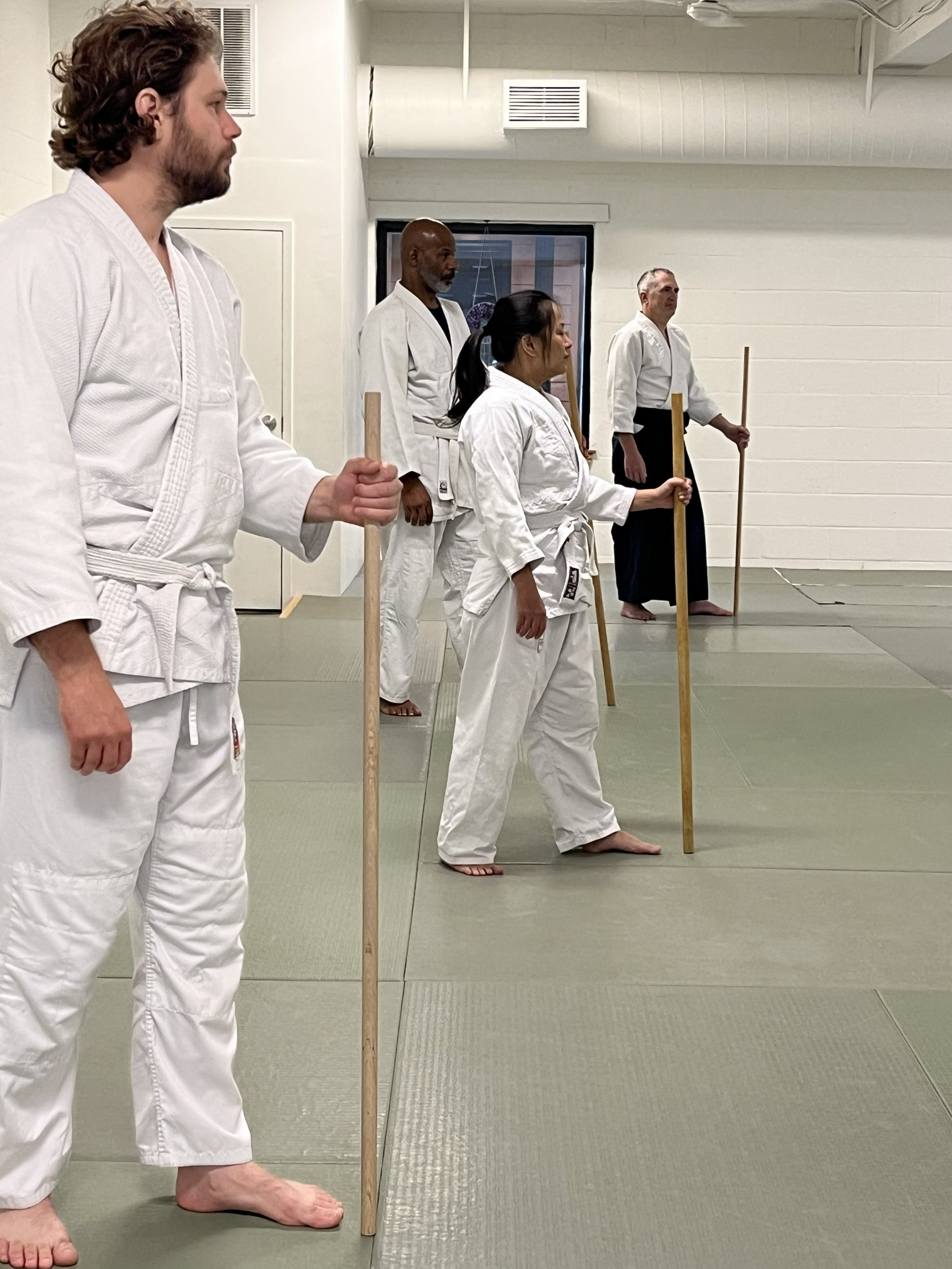
The name Aikido is composed of three Japanese words: ai, meaning harmony; ki, meaning spirit or energy; and do, meaning the path, system or way. Aikido is the way of the spirit of harmony.
“Aikido cannot be explained with words; one must practice and attain enlightenment of mind and body. Aikido training is not a sport nor asceticism; it is an act of faith based on the desire to achieve total awakening.” Abundant Peace, The Biography of Morihei Ueshiba, Founder of Aikido by John Stevens
The flow of ki throughout our bodies is a core belief within Aikido. Harmonizing our own ki through movement, with our attacker’s ki and through that harmony linking with the universal ki, is what is meant by “the spirit of harmony”. O’Senei had a much larger view of the world and saw Aikido to be more than just martial technique or a martial art. Rather he saw Aikido as a way of joining the peoples of the world together in peace.
“The true martial art is the one that defeats an enemy without sacrificing a single man; attain victory by placing yourself always in a safe and unassailable position. True budo is for the sake of peace and harmony; train daily to manifest this spirit throughout the world.”
- Morihei Ueshiba

.
Instructors
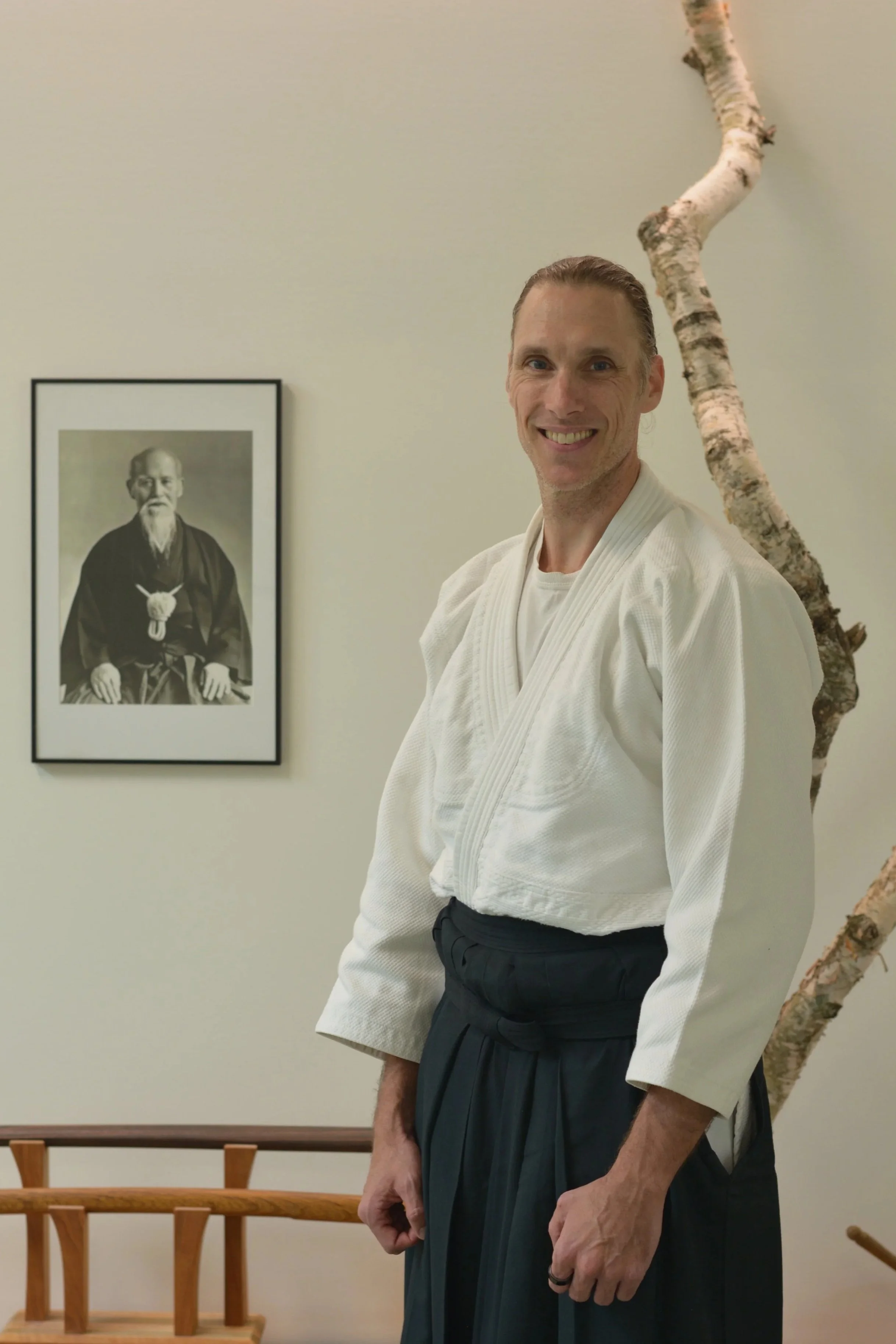
Kevin Eagan
Lead InstructorBIO TBD
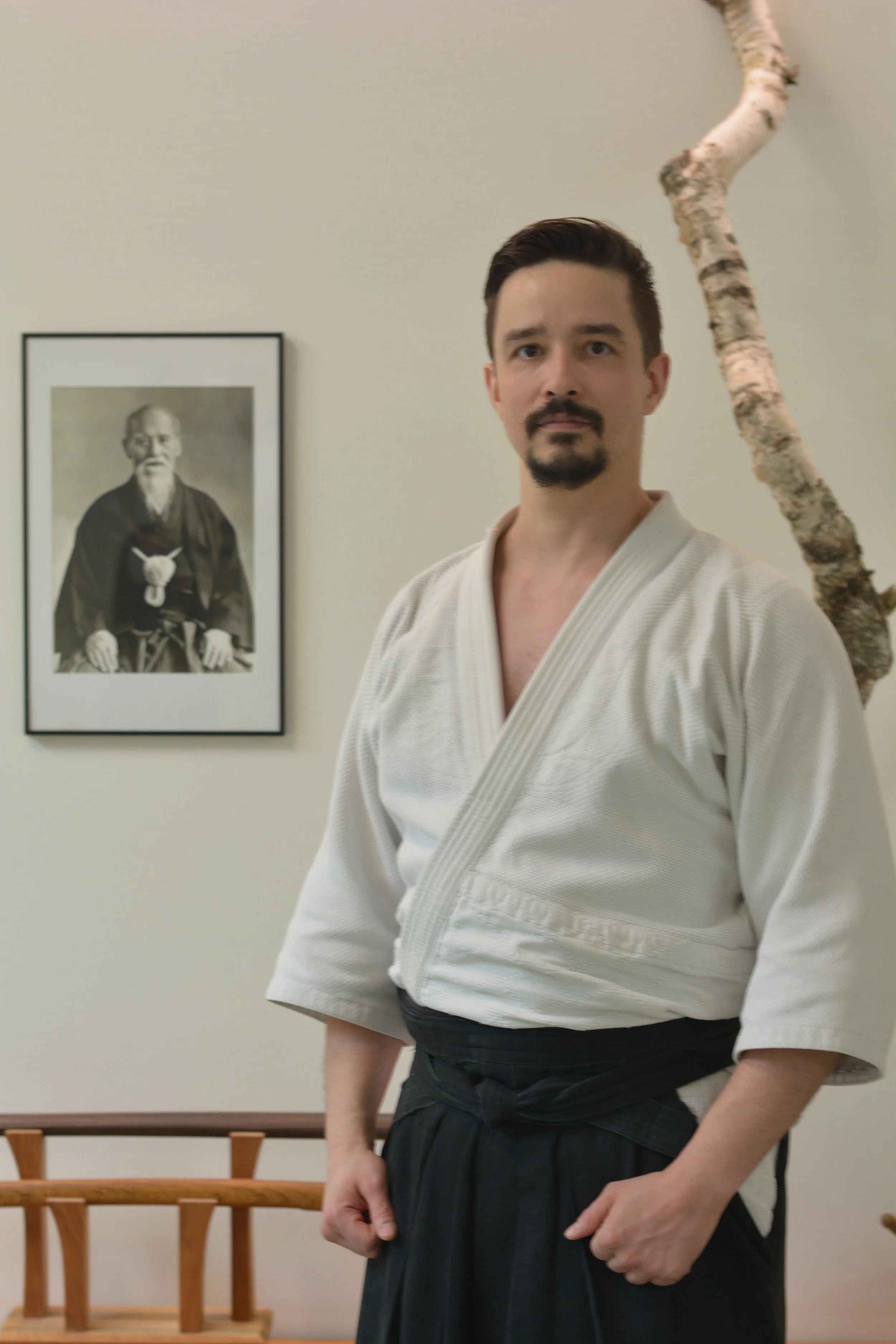
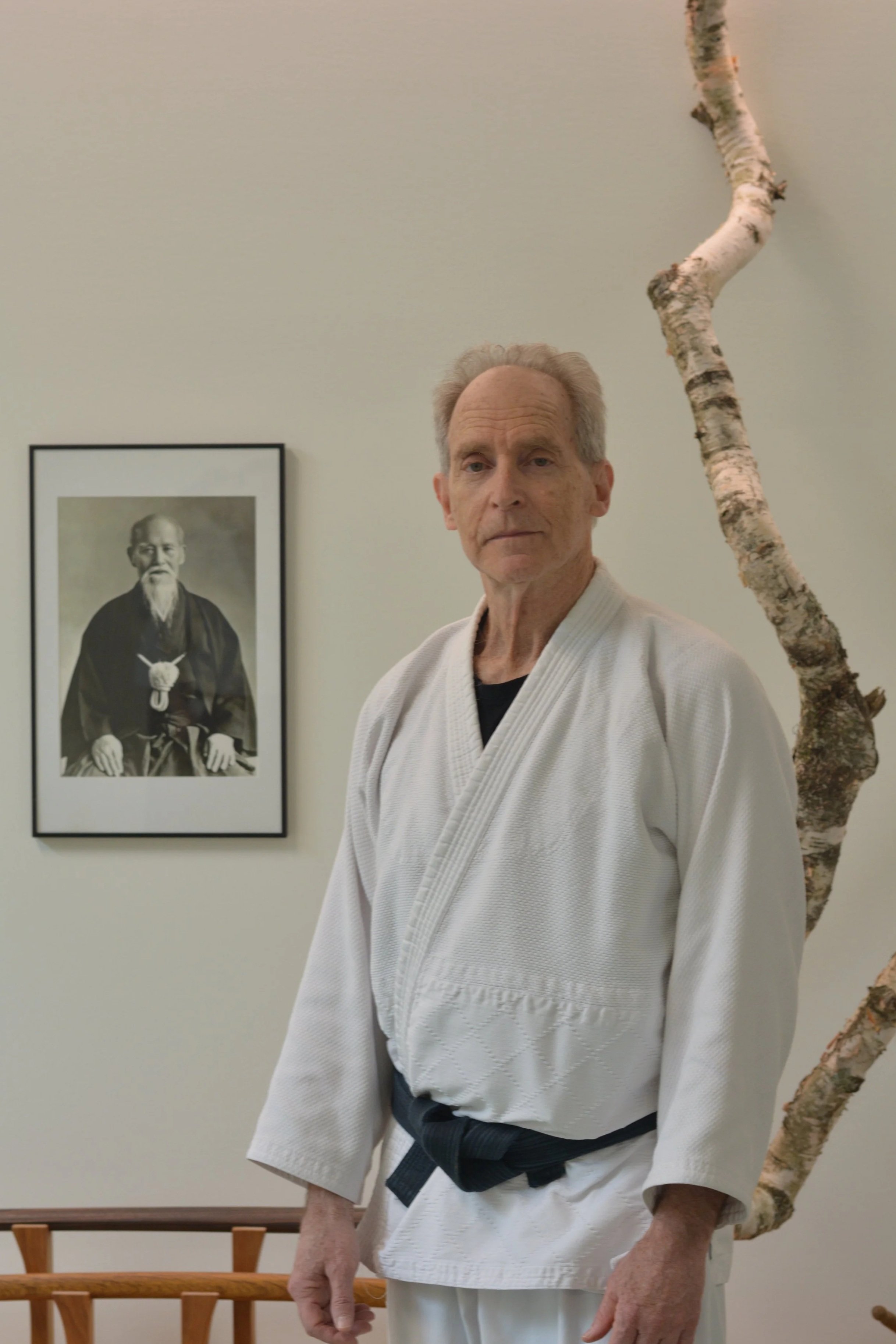
Alexander Sorisky
Alexander (5th Dan) has been fortunate and is grateful to have trained in Aikido for several decades in Canada, the United States, and France. He continues to be fascinated by the way Aikido offers us an approach to synthesize precision with flow, stance with movement, connection with empty space, contact with non-contestation, and awareness with posture.
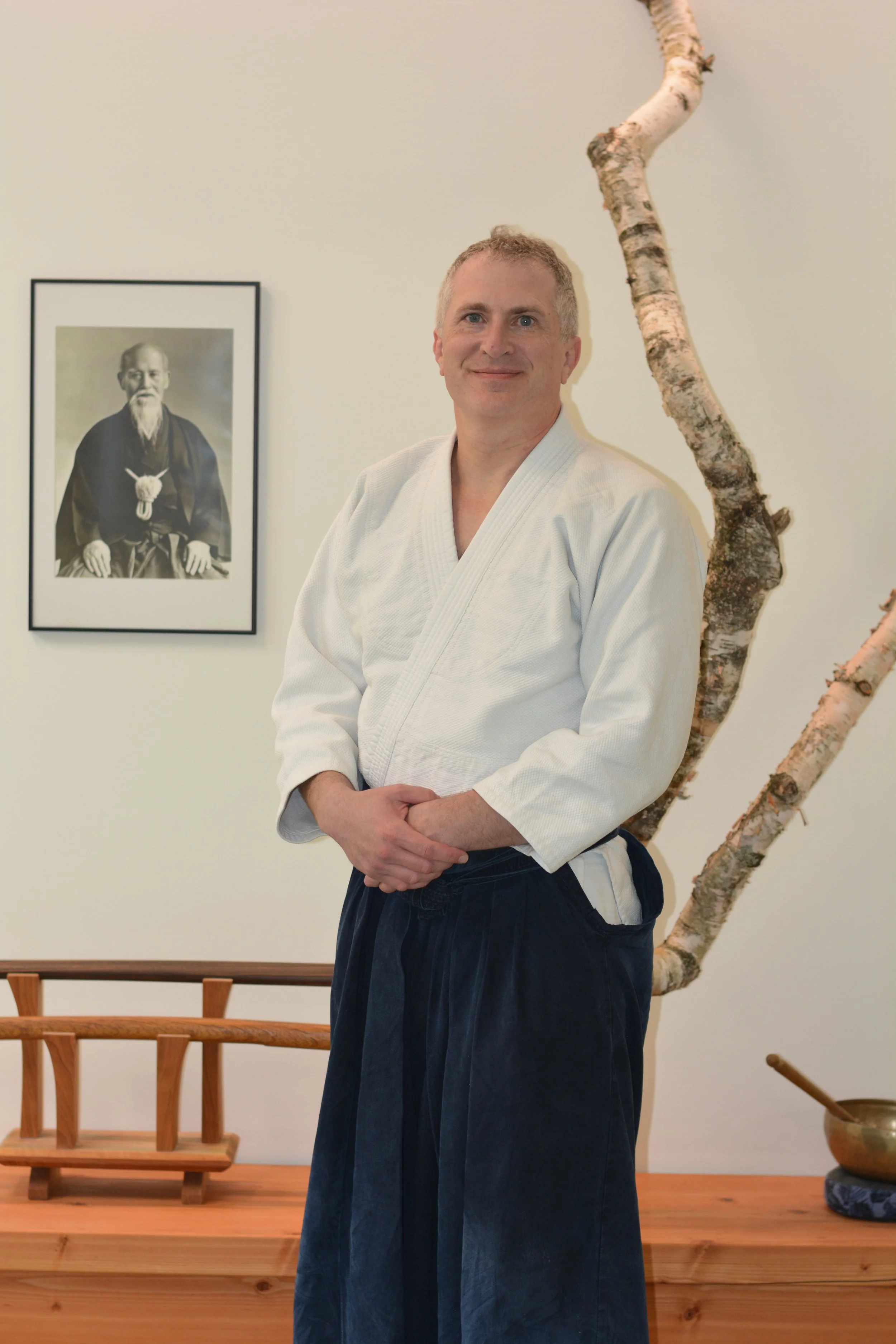
Sean Cavanagh
Mazda Salmanian
Mazda (4th Dan), began Aikido at the Ottawa Aikikai Dojo in 1994, with a smile. In 1996, he established a kids’ class curriculum and taught the kids for 21 years. Over the years, he trained under the direction of several shihan of the United States Aikido Federation (USAF). Mazda is currently an active instructor at the Ottawa Aikikai Dojo with a technical focus on flow of energy and transfer of power via breathing, while maintaining awareness on peripheral vision. Oh …, and he still smiles.
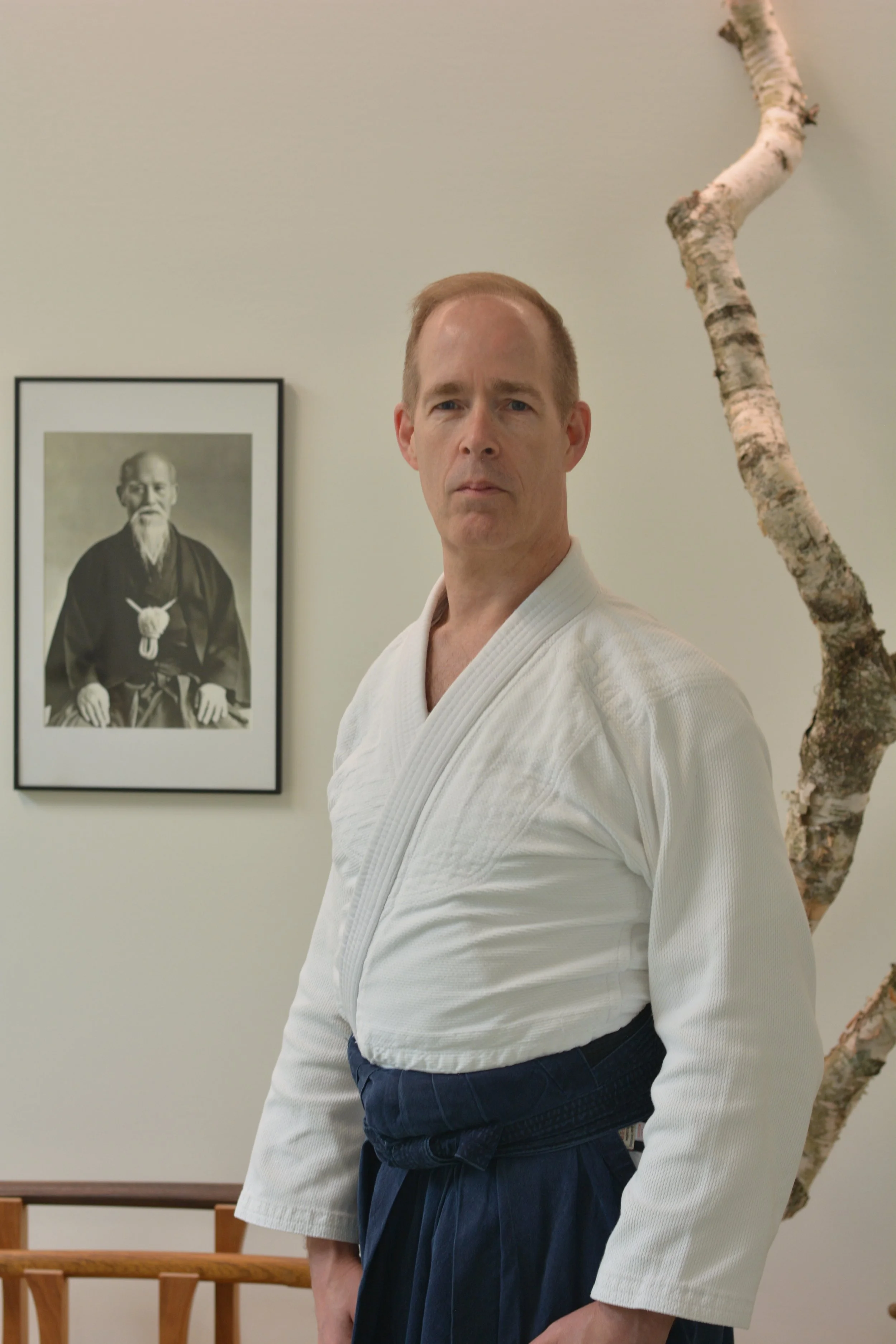
David Beyea
Dave (1st Dan) began martial arts in his university karate club and later trained with Canada Shotokan Karate. His Aikido practice emphasizes sincere attacks, strikes (atemi), and the belief that difficult training helps polish the soul (shugyo). Dave teaches some morning classes and leads the Saturday kids program. With more than 35 years of sweating heavily in white pyjamas, he considers himself proof that persistence can offset a lack of natural talent. Dave also holds a 1st dan in karate and serves as the Dojo’s membership manager.
Simon Guertin-Armstrong
Simon (3rd Dan) began his Aikido practice in Montreal in 2003. After training and competing in Karate as a teenager, he found in Aikido both a compelling blend of empty hand and weapon techniques, and a philosophy of self-betterment and service. He views improved physical fitness, broadened and deepened awareness, and longstanding friendships as gifts of sustained practice. Simon joined the Ottawa Aikikai Dojo in 2022 and currently teaches the Aikido Weapons Class. He also holds a 4th dan in Iaido and serves on the Dojo Board.
Sean (2nd Dan) took his first class at Ottawa Aikikai Dojo in 1996, and is grateful every day that he did. He cherishes the joy and love he cultivates through his Aikido practice, seeking to share that feeling with new students and old friends alike. Sean shares morning class teaching with Kevin and David, where he explores the intersection of practical martial arts and harmonious connection. He also regularly practices Brazilian Jiu-Jitsu, in which he holds the rank of blue belt, and serves on the Dojo Board.
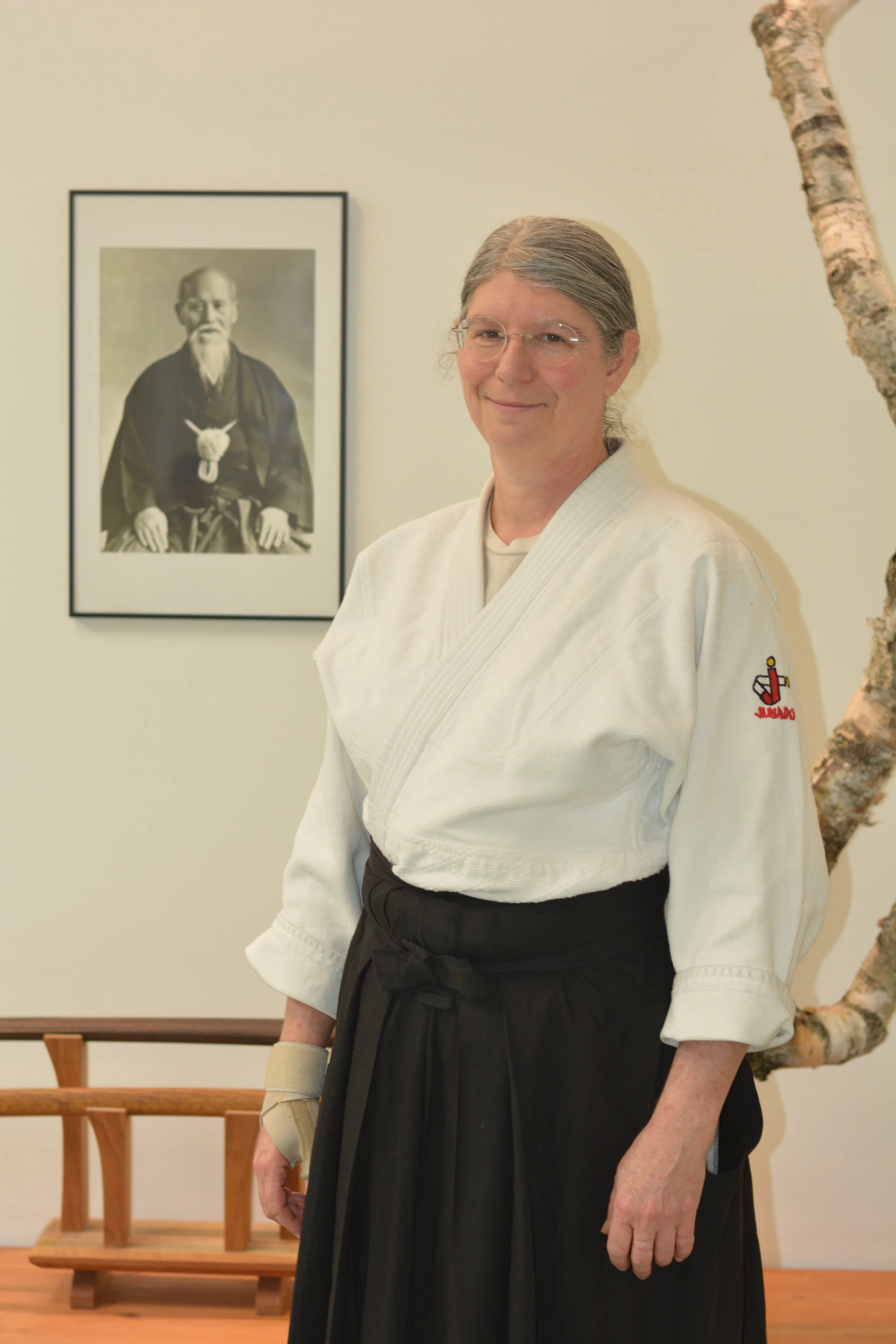
A.J. Ermenc
A.J. (1st Dan) started practising Aikido in 2001 and Iaido in 2002 at Ottawa Aikikai Dojo. She believes that that persistence will win over natural ability and maintains that Aikido may not be one size fits all, but it is adjustable. A.J. generally focuses her classes on entries, learning to move in such a way as to not put anyone’s body at risk, and relaxing through techniques rather than using brute force. When tailored to the abilities of bodies that have seen and done perhaps too much, her classes occasionally become “Aiki-Physiotherapy”. A.J. also teaches Iaido at the Dojo and has trained in armoured medieval combat since 2009.